Miracle of Calanda
Calanda, Spain · 17th Century
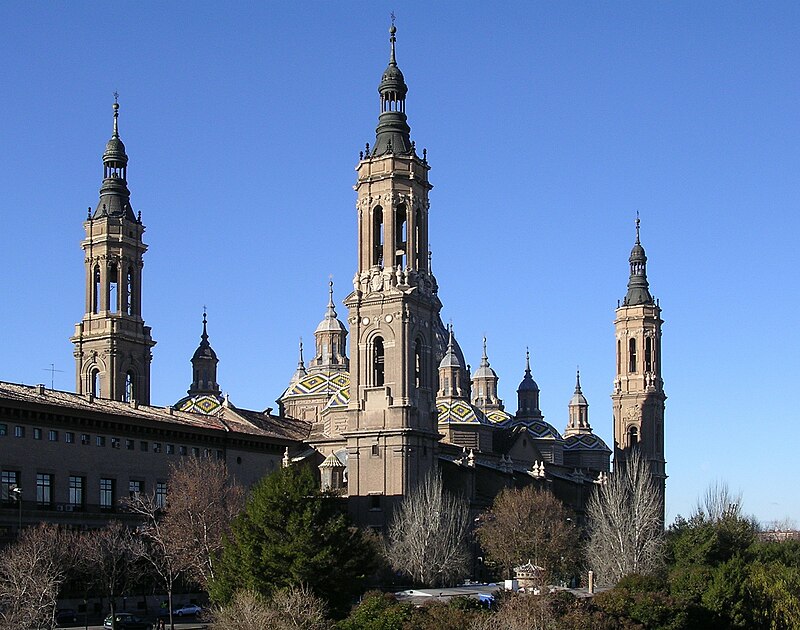
What Hume Said About It
David Hume addressed this miracle in "Of Miracles" (Section X of An Enquiry Concerning Human Understanding, 1748). He used the story of Miguel Pellicer—the Miracle of Calanda—as his prime example of a miracle with exceptionally strong testimony. Cardinal de Retz, a skeptical French politician, had passed through Saragossa (Zaragoza) and was shown a man known to the whole town as an amputee who had recovered his leg after the stump was rubbed with holy oil. Hume acknowledged:
- The witnesses: The entire town knew him; all the canons of the church vouched for it.
- The reporter: Cardinal de Retz was a "libertine" genius who did not believe the miracle himself—so he had no motive to promote a pious fraud.
- The nature of the miracle: Hume admitted that an amputated leg suddenly regrowing is "of so singular a nature as could scarce admit of a counterfeit."
"There is also a memorable story related by Cardinal De Retz, which may well deserve our consideration. When that intriguing politician fled into Spain, to avoid the persecution of his enemies, he passed through Saragossa, the capital of Arragon, where he was shewn, in the cathedral, a man, who had served seven years as a door-keeper, and was well known to every body in town, that had ever paid his devotions at that church. He had been seen, for so long a time, wanting a leg; but recovered that limb by the rubbing of holy oil upon the stump; and the cardinal assures us that he saw him with two legs. This miracle was vouched by all the canons of the church; and the whole company in town were appealed to for a confirmation of the fact... Here the relater was also cotemporary to the supposed prodigy, of an incredulous and libertine character, as well as of great genius; the miracle of so singular a nature as could scarcely admit of a counterfeit, and the witnesses very numerous, and all of them, in a manner, spectators of the fact, to which they gave their testimony. And what adds mightily to the force of the evidence... is, that the cardinal himself, who relates the story, seems not to give any credit to it, and consequently cannot be suspected of any concurrence in the holy fraud."
Hume proceeds to reject all miracles on principle. Yet for those who are not willing to turn a blind eye to supernatural evidence in order to maintain an obstinate ideology, his writings on Calanda serve as a strong support for the veracity of the miracle.
What Happened
In July 1637, Miguel Pellicer, 20, was crushed by a cartwheel near Valencia. His leg developed gangrene.
- He traveled 300 km to the Hospital of Our Lady of the Pillar in Zaragoza
- Surgeons Juan de Estanga and Diego Millaruelo amputated it in October 1637
- The leg was buried in the hospital cemetery
- For two years Pellicer begged in Zaragoza with a wooden leg; many knew him
On March 29, 1640, at his parents' home in Calanda, his mother found him asleep with two legs.
- The restored leg had the same scars: dog bite, cyst removal, thorn scratches
- It was initially shorter, cold, and blue—matching modern replantation physiology
- The cemetery grave was excavated and found empty
Why It Can't Be Dismissed
Surgeons testified under oath. The canonical transcript states: "Licentiate Juan de Estanga resolved to cut off said leg... [Diego Millaruelo] helped the execution, and saw it cut off, and this he said to be true per juramentum." Skeptoid initially claimed no doctors were interviewed; they corrected this after the transcript was cited.
"Begging for money" objection fails. Pellicer begged with one leg for two years in Zaragoza—hundreds knew him. He did not gain financially from the miracle.
"Peasant testimony" objection fails. Witnesses included:
- The two master surgeons who performed the amputation
- The assistant surgeon and hospital priest
- The royal notary and parish priest of Mazaleón
- The Archbishop of Zaragoza
- The Count of Peñaranda, who swore he had given Pellicer alms and touched his legs
Orthopaedic analysis. Dr. Landino Cugola, a limb-replantation specialist at the University of Verona, found the clinical description (cold, blue leg; contracted toes; initial shortening; later lengthening) matches modern replantation physiology.
Physical evidence. The cemetery grave was excavated and found empty.